Introduction
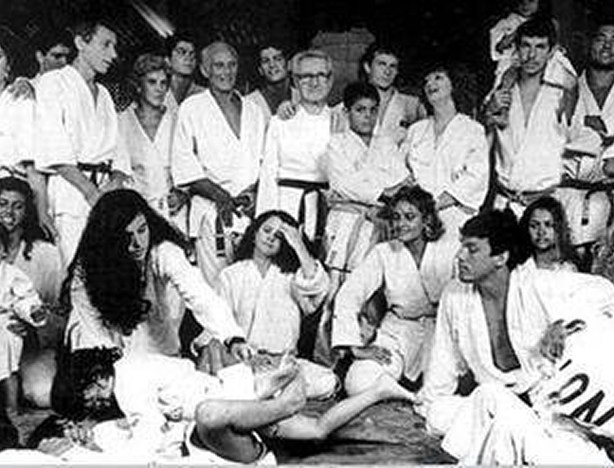
The story of the Gracie family is more than a tale of martial arts. It’s a story of transformation — of lives, of cultures, and of how discipline and resilience can create a global movement.
From its humble beginnings in Brazil to its influence across the five continents, the Gracie legacy continues to shape generations through Brazilian Jiu-Jitsu and a philosophy of healthy living.
How It All Began
In the early 20th century, Gaston Gracie, a descendant of Scottish immigrants, raised a large family in Brazil. Among his sons was Carlos Gracie Sr., who would become the patriarch of one of the most influential families in martial arts history.
The Discovery of Jiu-Jitsu
In 1916, as a teenager, Carlos Gracie watched a demonstration by Mitsuyo Maeda, a Japanese Jiu-Jitsu master who had recently arrived in Brazil. Carlos was captivated by the idea that technique and leverage could help a smaller person defeat a larger opponent.
That fascination turned into action — Carlos began training with Maeda and soon discovered that Jiu-Jitsu was far more than a fighting system. It was a way of life, rooted in discipline, self-control, and constant growth.
The Birth of Brazilian Jiu-Jitsu (BJJ)
Alongside his brothers — especially Hélio Gracie — Carlos began to modify and refine traditional Japanese Jiu-Jitsu techniques. Their focus shifted toward:
- Ground fighting
- Leverage-based control
- Energy-efficient submissions
The result was the birth of Brazilian Jiu-Jitsu (BJJ): a martial art that anyone, regardless of size or strength, could use to defend themselves effectively. It was technical, strategic, and inclusive — a true martial arts revolution.
The Gracie Lifestyle Philosophy
Carlos Gracie believed that true strength extended beyond physical ability. For him, a healthy body and a disciplined mind were inseparable.
With this belief, he developed the Gracie Diet — a nutritional approach designed to:
- Prevent illness
- Promote steady energy
- Support long-term physical and mental health
In addition to their diet and training methods, the Gracie family also championed values that remain core to BJJ culture:
- Respect
- Humility
- Perseverance
- Self-confidence
These principles weren’t just for the mats — they were meant to shape lives.
Global Expansion of the Gracie Legacy
Over the decades, the Gracie name grew far beyond Brazil:
- 1950–1970: The family built their reputation through public challenges and real fights in Brazil.
- 1980–1990: They brought BJJ to the United States, opening schools and teaching the art to a new generation.
- 1993: In a historic moment, Royce Gracie won the first-ever UFC (Ultimate Fighting Championship), showing the world the power and effectiveness of BJJ against a variety of martial arts styles.
That single event placed Brazilian Jiu-Jitsu — and the Gracie name — on the global map. Today, BJJ is one of the most practiced martial arts worldwide.
The Gracie Legacy Today
The legacy Carlos Gracie Sr. dreamed of lives on.
Across the globe, Gracie academies continue to train not just fighters, but leaders, mentors, and healthier human beings. Each class carries forward a philosophy that blends movement, mindset, and meaning.
The Gracie story isn’t just about winning fights.
It’s about changing lives.
GracieONE: Carrying the Legacy in Texas
GracieONE is a proud representative of this powerful legacy in Texas.
Here, you’ll find more than a martial arts gym — you’ll find a community built on purpose, discipline, and tradition. Our classes reflect the same values that transformed the Gracie family into a global name:
- Technical excellence
- Mental and physical resilience
- Respect for self and others
Ready to experience the power of Brazilian Jiu-Jitsu for yourself?
[Book your free trial class at GracieONE today]
And take the first step toward a stronger, healthier, and more confident you.